What is it?
The Prepared Piano is a project that involves transforming an old piano (one that can no longer be used normally) into a kind of universal instrument, capable of producing very diverse sounds and complex textures, which can be played by several people at the same time, giving an extra sense of exploration and discovery. We have been exploring new ways to approach the piano through different artistic projects (Anatomia do Piano, Pianoscópio) and have realized that there are many interesting ways to make sound on the piano, some of which do not require the type of musical training usually needed for conventional playing. At the same time, we realized that there are many pianos that have been abandoned because they can no longer be played in the traditional way but they still have immense potential to be expressive musical instruments, as long as they are approached from a different perspective. The Prepared Piano project is very easy and basically depends on finding a piano that is no longer wanted. The suggestions we give here are just some of the ones we have successfully tried out.
How to make it
Materials and Tools
To make a Prepared Piano you need an old piano that you can do whatever you like to without worrying about damaging an instrument that might look like it needs to be restored or tuned. It may sound strange, but there are actually many cases when a piano is in such a sorry state that it is not worth fixing and the owners are thankful for being freed from the bother. The piano used in this project is one such case.
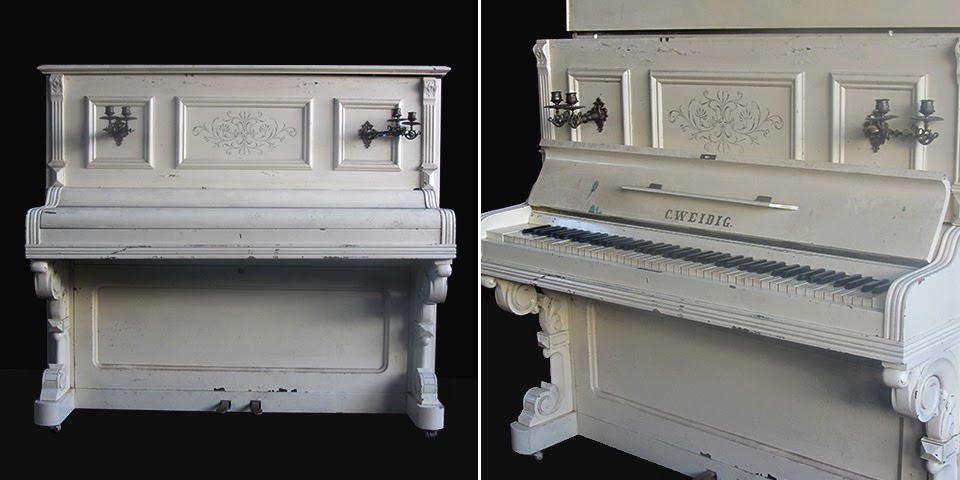
The project simply consists of opening up the piano so you have direct access to the strings and using a set of implements on the strings to make sound in different ways. Normally we play the piano by pressing our fingers on the keys, which operates hammers that strike the strings, so the pianist does not interact directly with mechanism that produces the sound. In this project the idea is to directly manipulate the strings by rubbing, striking and using small objects to alter the sound.
Procedure
Simply open the piano and remove the coverings, bearing in mind that piano coverings are attached in different ways. Pianos have a top covering, a front covering, a covering on the keys, and a base covering. They can all be easily removed.
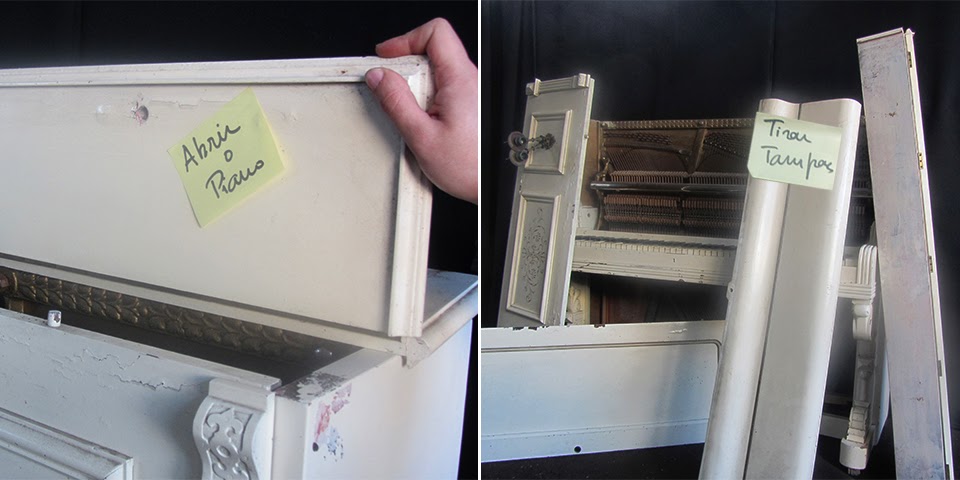
You also need to remove the piano mechanism (the mechanical part that contains the hammers and dampers).
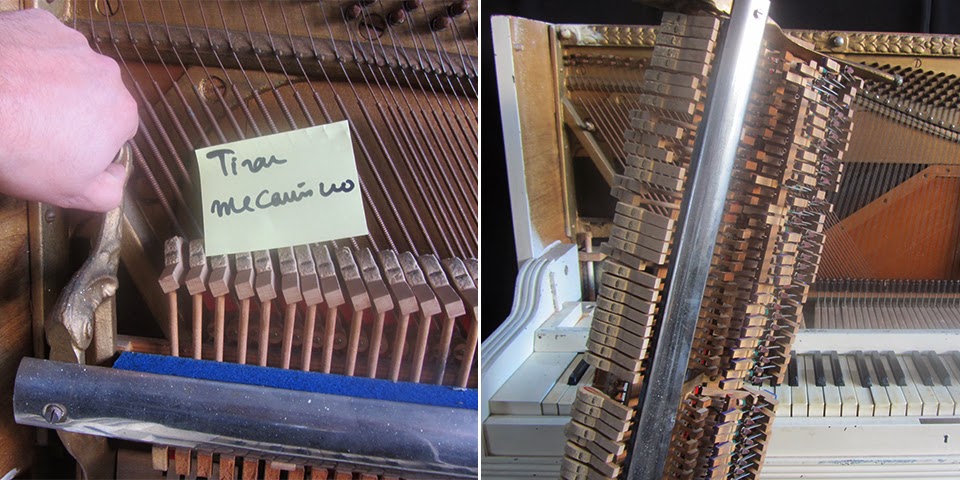
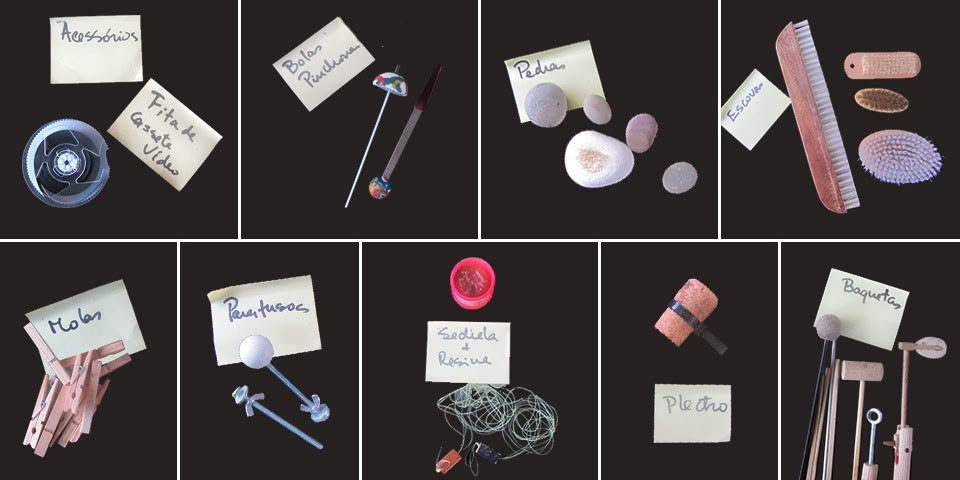
The piano is now ready to be played in various unusual ways. For this, you will need some implements. The following list is not exhaustive — these are just some of things we have tried that work well:
Fishing line
The idea is to rub the line back and forth on the piano strings. The line should cause some friction on the string so you might need to apply some rosin (the same type used for string instrument bows) or lightly sand the line.
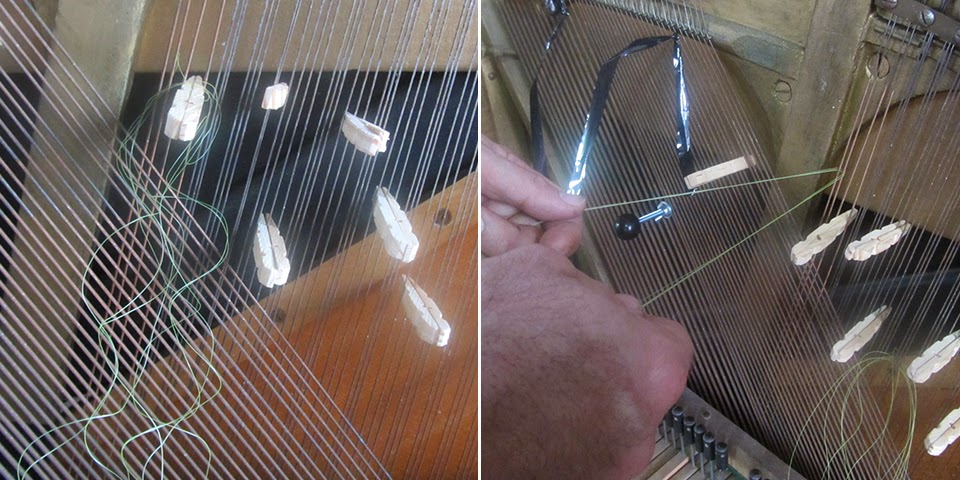
Magnetic tape (from tape or video cassettes)
Tie the tape to the top of a piano string, wet your fingers, rub the tape.
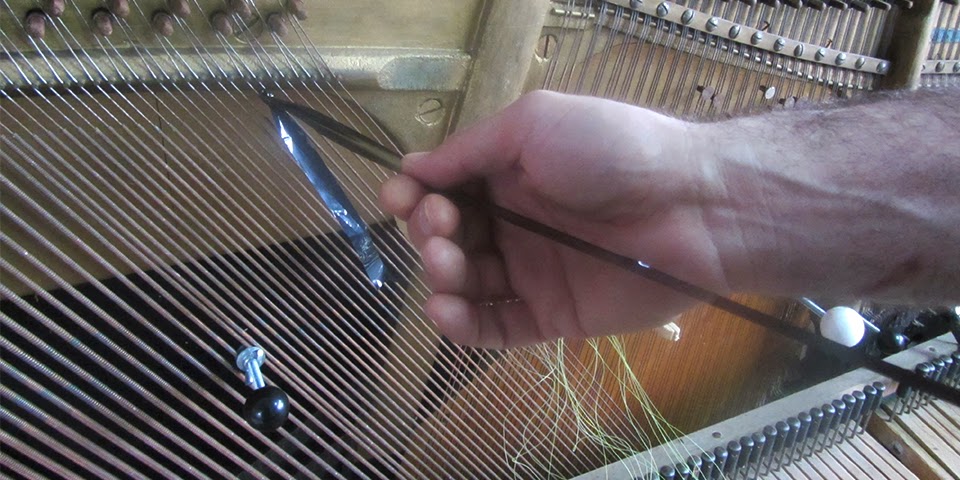
Brushes (for clothes, shoes, teeth etc.)
Rub the strings with brushes of various sizes and textures (softer or rougher).
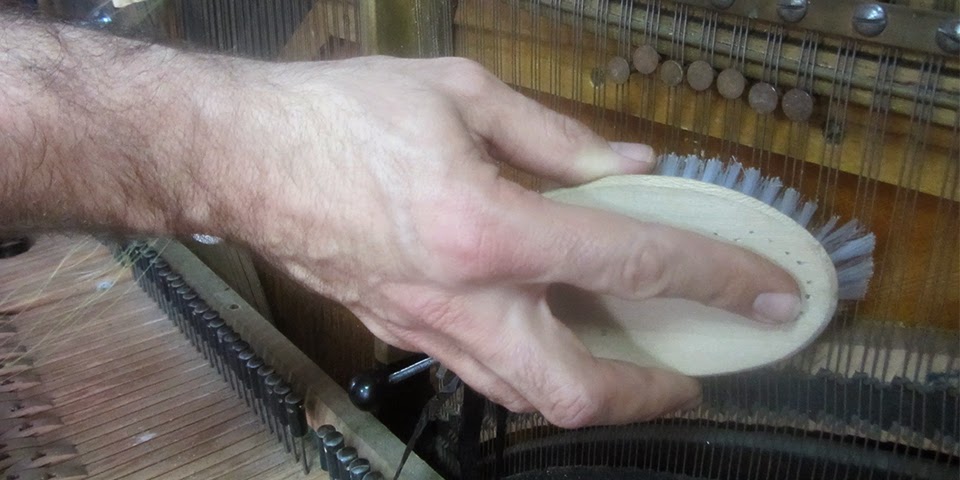
Plectrums
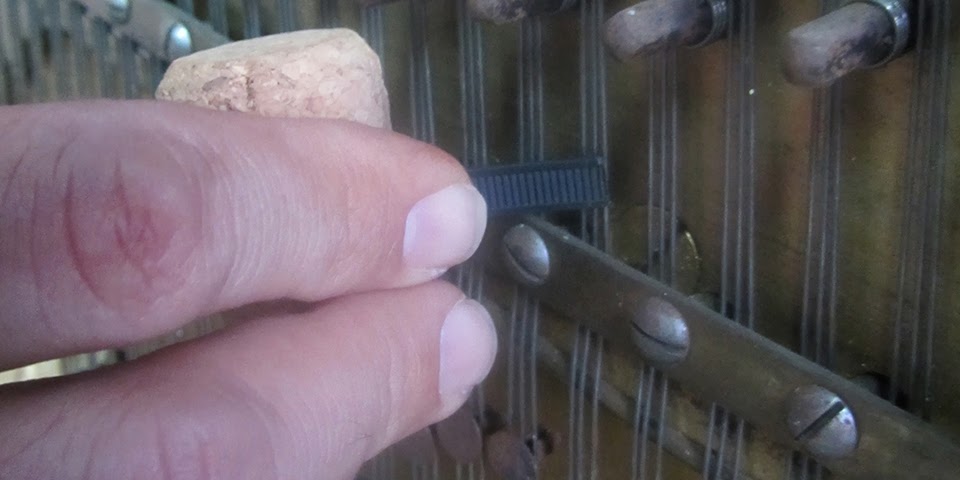
Make a simple plectrum by tightly wrapping a cable tie around a cork or small piece of wood and cutting the end to leave 4-5 cm. Use it to play the piano strings individually or run it over a set of adjoining strings.
Beaters
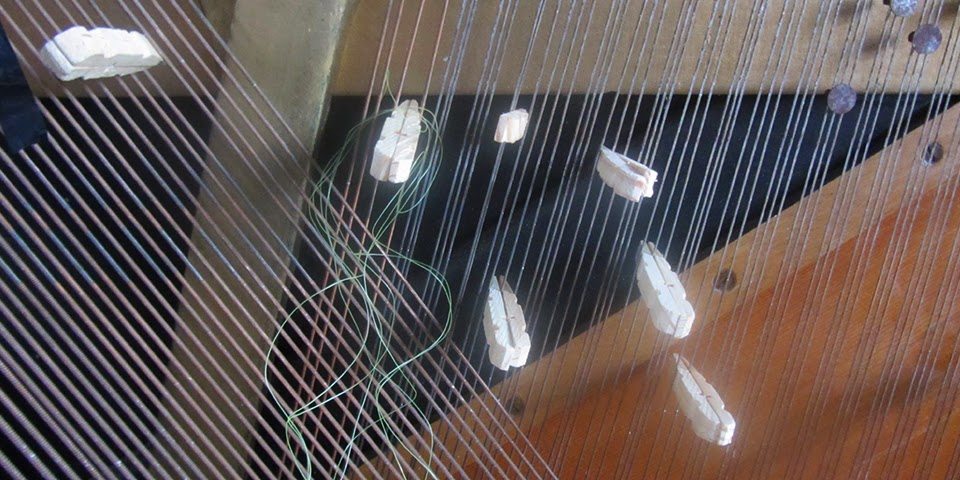
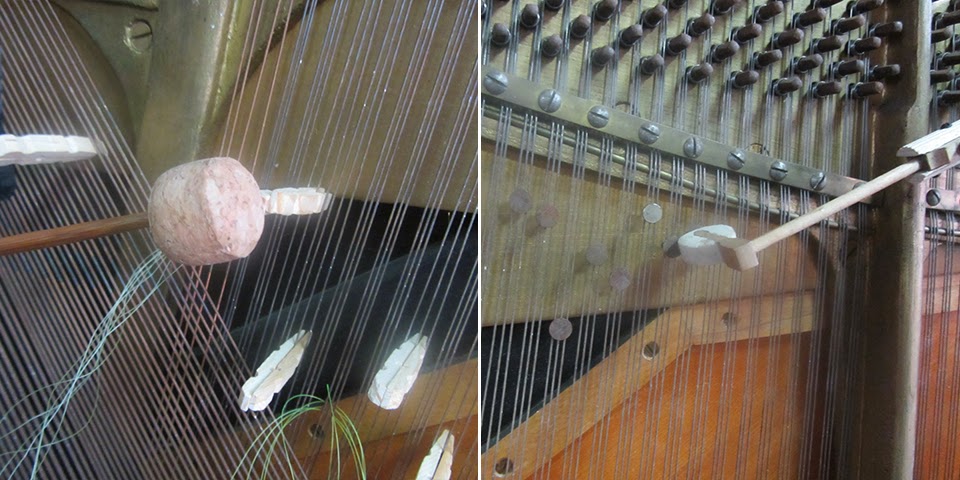
You can use drumsticks and beaters of all kinds, from those designed for other percussion instruments to simple sticks made from chopsticks and cork, for example. Use beaters directly on the piano strings or place objects between the strings to change the sound. You could use wooden clothes pegs, for example, which makes it sound more like a gong, or spring head nails.
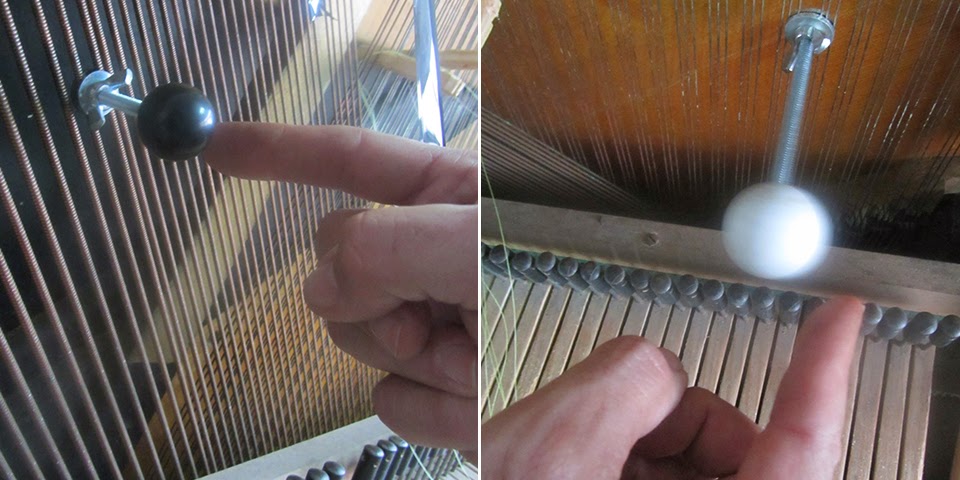
Rubber balls on sticks
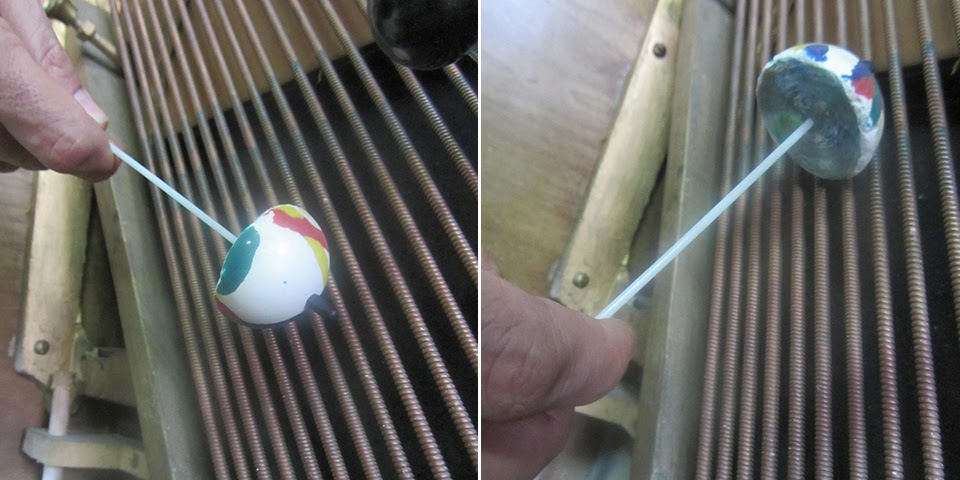
Although these look like drumsticks the idea is to rub the strings, dragging the ball along one or more strings, applying pressure. It makes a roaring or crying sound.
Stones
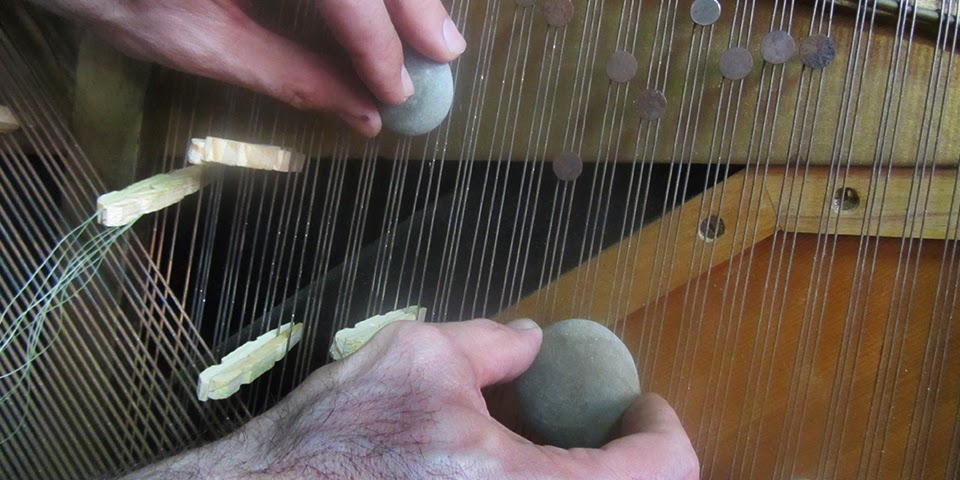
Rub the piano strings with smooth stones.
Screws
Place screws between the piano strings. You can hit them with a stick or your hand (the result is a very long sound with an undefined pitch).
Some original compositions
Memphis
Suite 19999 Léguas Submarinas #1: Primeiras Léguas
Suite 19999 Léguas Submarinas #2: Segundas Léguas
Suite 19999 Léguas Submarinas #3: Terceiras Léguas
Suite 19999 Léguas Submarinas #4: Quartas Léguas
Suite 19999 Léguas Submarinas #5: A Légua Perdida
Tuva
Instructions
You can print instructions to refer to when you are doing this project.
Click here to download the instructions for Piano Preparado.